Producing medical plastic components involves much more than achieving dimensional accuracy. Components used in healthcare applications are expected to meet strict requirements for traceability, material consistency, contamination control, and process stability. Even when a design is optimized and a high-performance resin is selected, the final product still depends on how well the manufacturing process is controlled.

This is why medical injection molding standards extend beyond molding technology itself. Quality systems, environmental controls, and validation procedures all contribute to the reliability of medical devices throughout their service life.
This article explores four essential aspects of medical injection molding: ISO 13485 compliance, medical-grade plastics, cleanroom molding, and process validation. Together, these elements provide the foundation for consistent and repeatable medical manufacturing.
How Does ISO 13485 Support Traceability and Risk Management
ISO 13485 does not define how a component should be molded. Instead, it establishes how manufacturers document, trace, and manage risks throughout the production lifecycle. One of the primary objectives of ISO 13485 injection molding is to ensure that quality-related activities are properly controlled and documented.
Documentation and traceability.
One of the central principles of ISO 13485 injection molding is traceability. Manufacturers are expected to maintain records that connect each component to the materials, process settings, and inspections involved during production. This level of documentation becomes particularly important for Class II and Class III medical devices, where customers often require detailed production histories.
Typical documentation includes material certifications, process parameters, inspection reports, device history records, and corrective and preventive actions. Complete records not only support regulatory audits but also help manufacturers investigate quality issues and implement corrective actions more efficiently.
Risk management throughout production.
Risk management is another important requirement under ISO 13485. In practice, many manufacturers integrate the principles of ISO 14971 to evaluate potential risks associated with materials, tooling, and process variations. The objective is to identify possible failures before they affect the performance of the final product.
This risk-based approach allows medical manufacturers to reduce variability and improve long-term process consistency. These requirements also explain why medical injection molding involves much more than shaping plastic parts. Documentation, traceability, and risk management are all essential for supporting regulatory compliance and maintaining consistent product quality.
Which Medical-Grade Plastics Are Commonly Used in Medical Injection Molding
Material selection has a direct influence on biocompatibility, sterilization resistance, and long-term durability. For many healthcare applications, engineers rely on medical-grade plastics that comply with USP Class VI requirements because these materials have undergone biological reactivity testing.
PEEK for implantable and high-load components.
Polyether ether ketone, commonly known as PEEK, is widely used in orthopedic implants, spinal devices, and other demanding applications. Its popularity stems from the combination of high mechanical strength, excellent chemical resistance, and the ability to withstand repeated sterilization cycles. These characteristics allow PEEK to maintain stable performance in environments where both durability and biocompatibility are essential.
For customized implant geometries, engineers often evaluate both additive manufacturing and injection molding. 3D printing offers greater flexibility and supports low-volume production, while injection molding provides higher repeatability and lower unit costs when production volumes increase. As a result, the choice between these manufacturing methods often depends on production volume, design complexity, and regulatory considerations.
Polycarbonate for transparent medical components.
Polycarbonate (PC) is valued for its combination of transparency and impact resistance. The material is frequently used in blood reservoirs, diagnostic equipment housings, and medical connectors. Its compatibility with gamma sterilization further expands its use in healthcare applications where visibility and structural performance are equally important.
Polysulfone for repeated sterilization environments.
Polysulfone (PSU) maintains dimensional stability under repeated steam sterilization conditions. Its resistance to heat and hydrolysis makes it suitable for reusable medical devices and fluid-handling systems that operate under demanding environments.
Regardless of the resin selected, consistency remains essential. Variations in resin properties can affect mechanical performance and dimensional stability, which is why incoming material verification plays an important role in medical manufacturing. Maintaining stable Material quality helps ensure that molded components meet both functional and regulatory requirements throughout their service life.
How Does Cleanroom Molding Control Particle Contamination
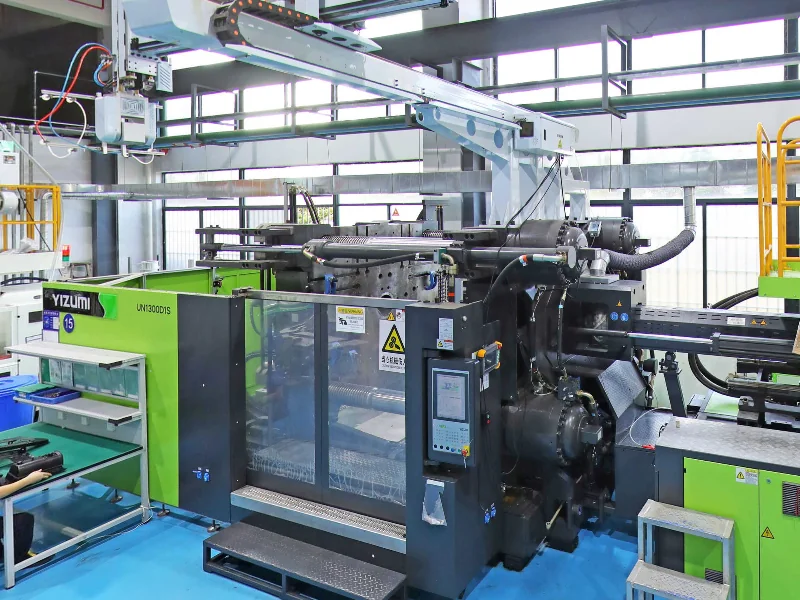
Even with certified materials and validated processes, contamination can compromise product quality. Cleanroom molding addresses this challenge by controlling airborne particles and maintaining stable environmental conditions throughout production.
HEPA filtration and air circulation.
High-efficiency particulate air filtration systems continuously remove particles from circulating air. This helps maintain the cleanliness levels required for sensitive medical applications and reduces the likelihood of contamination during molding and assembly operations.
Positive pressure environments.
Medical cleanrooms typically operate under positive pressure. By maintaining a higher internal pressure than the surrounding area, outside contaminants are prevented from entering the production environment. This contributes to more stable manufacturing conditions and lower contamination risks.
Controlled personnel access.
Human activity represents one of the most significant sources of particulate contamination. For this reason, operators follow gowning procedures and controlled access requirements designed to minimize particle generation inside the cleanroom.
Depending on product requirements, many facilities operate under ISO Class 7 or ISO Class 8 conditions. These environments are commonly used for products such as diagnostic cartridges, catheter components, drug delivery systems, and disposable medical consumables.
By combining environmental controls with process monitoring, cleanroom molding helps manufacturers improve product consistency and maintain cleanliness standards throughout production.
Why Are IQ, OQ, and PQ Important for Medical Device Deliveries
Medical customers expect manufacturing processes to remain stable over time. Process validation provides documented evidence that production can repeatedly deliver parts that meet established specifications. For regulated healthcare products, validation is not simply a quality requirement. It is also an important part of supplier qualification and long-term production consistency.
Installation Qualification (IQ)
Installation Qualification verifies that molding machines and supporting equipment are correctly installed and configured. This stage confirms that the manufacturing system is suitable for production activities before validation progresses further.
Operational Qualification (OQ)
Operational Qualification focuses on identifying acceptable process windows. Engineers evaluate variables such as melt temperature, injection pressure, holding pressure, cooling time, and cycle time to establish operating ranges that support stable production and minimize process variation.
Performance Qualification (PQ)
Performance Qualification demonstrates that the validated process can consistently produce conforming parts under normal operating conditions. Production runs are performed to verify repeatability, dimensional accuracy, and functional performance.
Together, IQ, OQ, and PQ provide documented evidence that manufacturing processes remain stable throughout long-term production. For medical device companies, validated processes support supplier qualification, regulatory submissions, and audit readiness. More importantly, they provide confidence that production can consistently deliver components that satisfy dimensional, functional, and regulatory requirements throughout the product lifecycle.
This level of consistency is particularly important when products move from prototype development to volume manufacturing. By reducing process variability and improving repeatability, validation helps medical customers maintain reliable deliveries and minimize quality risks across multiple production batches.
Conclusion
Medical injection molding standards are built on four interconnected elements: compliance, material selection, contamination control, and process validation. Each element contributes to the consistency and reliability required for healthcare applications.

Medical-grade plastics such as PEEK, polycarbonate, and polysulfone provide the foundation for performance and biocompatibility, while ISO 13485 injection molding requirements establish the framework for traceability and risk management. Combined with cleanroom molding and IQ/OQ/PQ validation, these practices help manufacturers maintain quality throughout the production lifecycle.
At APT-Mold, every medical injection molding project begins with a detailed engineering review. Our team evaluates material selection, tooling design, process control, and validation requirements to help customers balance product performance, regulatory expectations, and manufacturing efficiency before production begins.