Precision mold making depends on more than accurate design. The manufacturing process must also produce mold components that maintain tight dimensional consistency, especially when molds feature intricate geometries or are made of hardened tool steel. Conventional machining handles many operations efficiently, but some features remain difficult or impractical to produce with rotating cutting tools.
Wire Electrical Discharge Machining (Wire EDM) addresses these challenges by removing material through controlled electrical discharges instead of mechanical cutting. As a result, it has become an essential process for producing precision mold components with complex profiles, sharp corners, and narrow features.
What Is Wire EDM and How Does It Work?
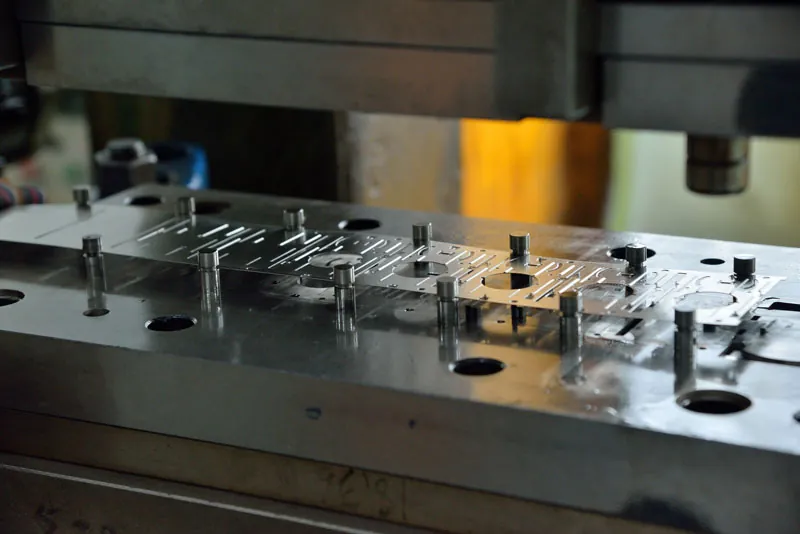
Wire EDM (Electrical Discharge Machining) utilizes a thin metal wire that passes through a workpiece submerged in a dielectric fluid. An electric current flows between the wire and the workpiece, generating controlled sparks that erode material with micron-level precision.
There is no physical contact between the wire and the workpiece, so the process applies virtually no cutting force. Therefore, it is particularly suitable for machining hardened steels and intricate mold geometries that would be difficult to produce with conventional machining.
What’s the Difference Between Wire EDM and CNC Milling
Wire EDM is not intended to replace CNC machining. Instead, the two processes complement each other throughout mold production.
| Wire EDM | CNC Milling |
| Removes material using electrical discharges | Removes material using rotating cutting tools |
| Virtually no cutting force | Mechanical cutting forces are applied |
| Suitable for hardened conductive materials | Suitable for most machining operations |
| Ideal for narrow slots, sharp corners, and precision profiles | Ideal for pockets, surfaces, drilling, and rough machining |
In many tooling projects, CNC machining removes most of the material, while Wire EDM is used for features that require tight dimensional control or geometries that are difficult to mill.
When Should You Use Wire EDM Instead of CNC Machining?
Wire EDM is typically selected when mold features have narrow profiles, tight internal geometries, or hardened sections that are difficult to machine efficiently with conventional cutting tools. Rather than replacing CNC machining, it completes operations that demand exceptional geometric accuracy.
Deep slots and narrow ribs
Deep slots and thin ribs are common in injection molds, particularly for plastic parts with complex internal structures. These features often exceed the reach or rigidity of conventional milling tools.
Wire EDM can produce narrow profiles with consistent dimensions when appropriate machine settings, wire tension, and flushing conditions are maintained.
Sharp internal corners
Conventional rotating cutting tools generally leave an internal corner radius related to the cutter radius. Many mold components, however, require much sharper internal corners for accurate assembly.
Wire EDM can produce smaller internal corner radii because the wire diameter and electrical discharge gap allow tighter profiles than many conventional milling tools. This capability is particularly useful for precision inserts, shut-off areas, and detailed mold cavities.
Precision inserts and complex profiles
Many wire EDM mold components include precision inserts, sliders, punches, and other intricate tooling elements that require tight dimensional control after heat treatment.
Because Wire EDM can follow highly accurate programmed paths, manufacturers often use it to produce components with complex contours that would be difficult or uneconomical to machine using conventional methods alone.
Why CNC and Wire EDM are often used together
Rather than choosing one process over another, experienced mold manufacturers combine both technologies to improve efficiency.
Typical machining strategy
- CNC machining removes bulk material.
- Heat treatment increases material hardness.
- Wire EDM finishes precision features.
- Grinding and polishing complete the mold where required.
How Does Wire EDM Improve Mold Quality and Reduce Flash?
Accurate machining allows mold components to fit together more consistently. Properly machined shut-off surfaces can reduce flash, simplify mold fitting, and support stable mold performance over repeated production cycles.
Why shut-off surface accuracy matters
Flash often occurs when mating surfaces do not seal properly during injection molding. Although processing conditions also influence flash, dimensional inaccuracies in mold components can contribute to gaps between shut-off surfaces.
Wire EDM helps manufacturers produce mating features with high dimensional consistency, making it easier to achieve accurate mold assembly and reduce the need for repeated manual fitting.
How dimensional consistency supports longer mold life
Consistent dimensions are important throughout the entire service life of a mold. Components that fit correctly distribute loads more evenly and reduce unnecessary wear caused by misalignment.
When replacement inserts or repaired sections maintain the original design dimensions, mold maintenance also becomes more predictable, reducing the amount of fitting work required during future repairs.
Why Wire EDM contributes to precision mold making
Wire EDM plays an important role in precision mold making because it complements other machining processes rather than replacing them. Manufacturers often rely on Wire EDM for features that directly influence mold accuracy, including shut-off surfaces, precision inserts, and hardened steel components.
What Wire EDM Capabilities Does APT Offer?
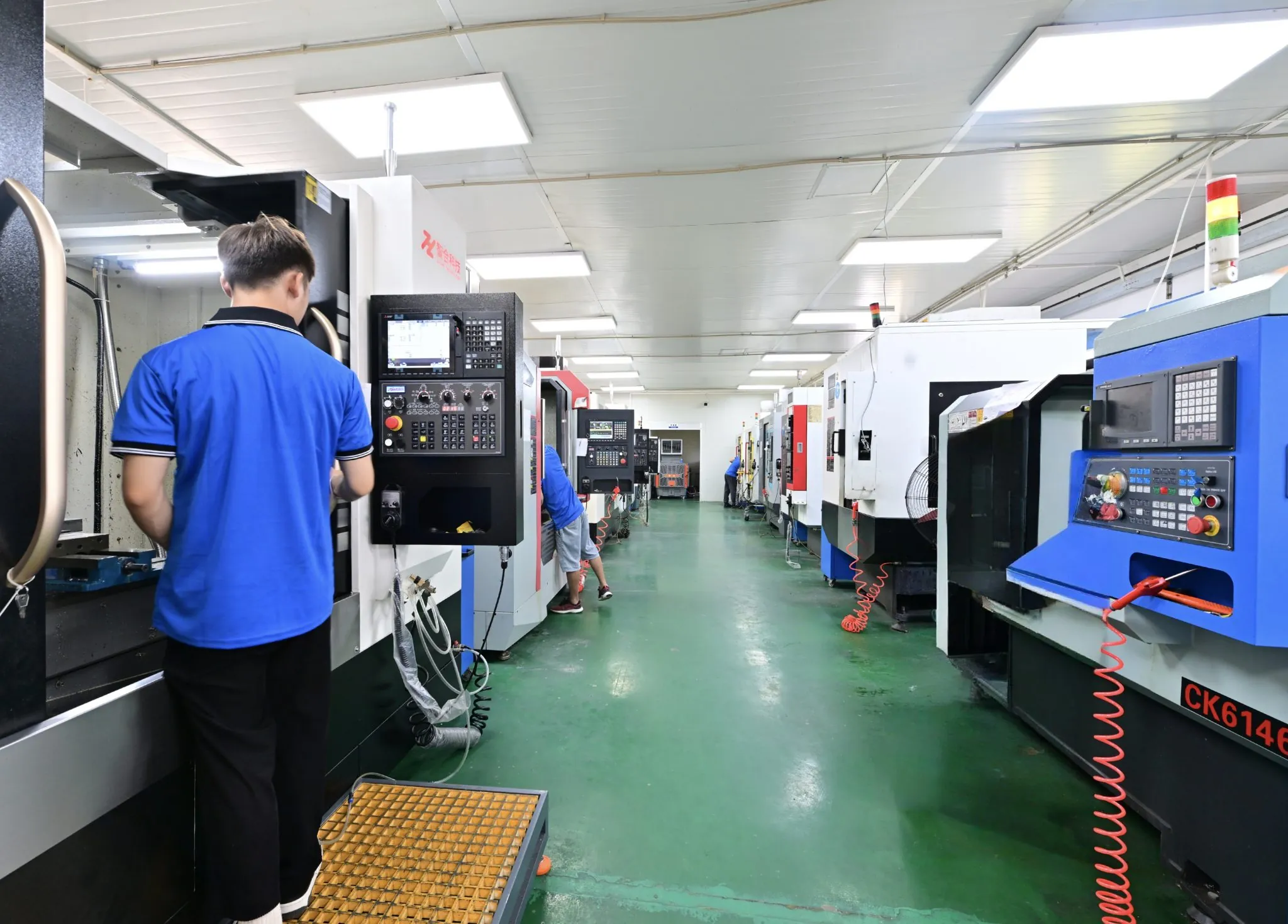
Many mold repairs require precision machining on hardened steel components. Because APT performs Wire EDM in-house as part of its tooling workflow, repair work can move directly from engineering review to machining without an additional external machining handoff. This integrated approach helps shorten mold repair cycles and supports more efficient tooling projects.
Why mold repairs often require Wire EDM
Mold repairs frequently involve replacing inserts, correcting shut-off surfaces, modifying hardened steel components, or implementing engineering changes after trial molding.
These tasks often require machining operations that conventional milling cannot perform efficiently once the mold has been heat treated. Wire EDM provides an effective solution for restoring critical mold features while maintaining dimensional consistency.
Why in-house Wire EDM reduces outsourcing delays
When Wire EDM is outsourced, every repair typically involves additional transportation, supplier scheduling, machining, and inspection before the mold returns for assembly. Each handoff introduces additional coordination and waiting time.
With in-house Wire EDM, machining can move directly into mold assembly, inspection, and trial molding. Engineering teams can review design changes, update machining programs, and continue the tooling process without relying on external machining providers.
How APT integrates Wire EDM into its tooling workflow
According to APT’s rapid tooling workflow, EDM machining is integrated with DFM analysis, mold design, CNC machining, mold assembly, trial molding, and inspection. Keeping these processes within the same manufacturing facility allows engineering and production teams to coordinate more closely throughout both mold manufacturing and repair.
This integrated workflow helps reduce supplier handoffs, supports quicker implementation of engineering changes, and shortens mold repair cycles. For manufacturers seeking reliable wire EDM mold components for precision mold making, having machining, assembly, and inspection managed within one workflow can simplify project communication while improving production efficiency.
Conclusion
Wire EDM has become an essential manufacturing process because it produces precision mold features that conventional machining alone cannot easily achieve. From machining narrow slots and sharp internal corners to improving shut-off surface accuracy, the process supports both mold quality and long-term maintenance.
Equally important, Wire EDM delivers the greatest value when it is integrated into a complete tooling workflow. By combining Wire EDM with CNC machining, mold assembly, inspection, and trial molding, manufacturers can respond more efficiently to engineering changes and repair requirements.
APT incorporates Wire EDM into its in-house rapid tooling process alongside other core mold manufacturing services. This integrated approach helps streamline communication between manufacturing stages, supports faster mold modifications, and shortens repair cycles.